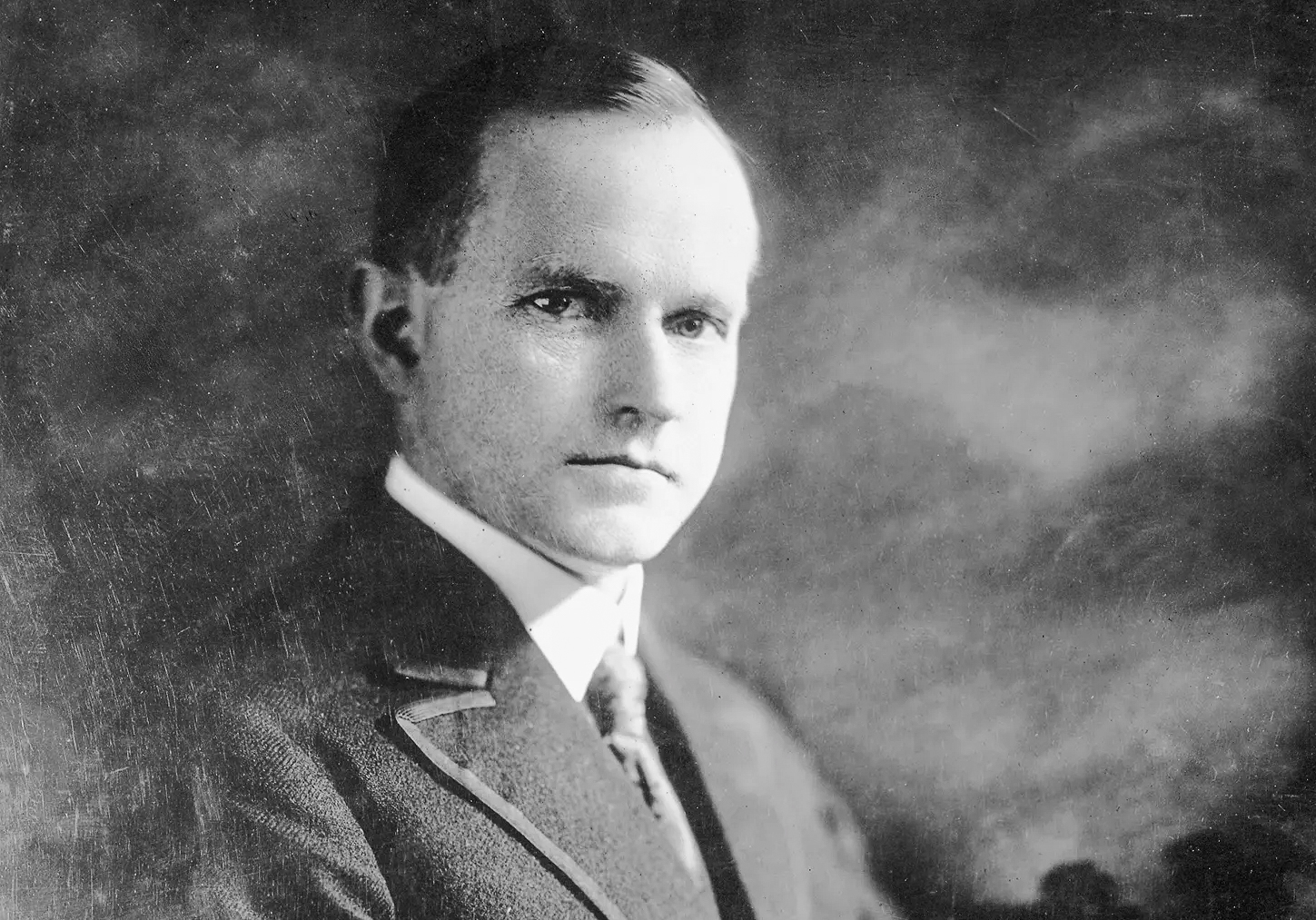
Calvin Coolidge is a president seldom revered and frequently forgotten. After taking the presidency following the death of running mate Warren G Harding, Coolidge served as president from 1923 to 1929, running an administration that’s laissez-faire economic policies and fiscal responsibility helped bring about rampant economic growth of the roaring twenties. Coolidge’s stint as president and amazing economic accomplishments are frequently overshadowed by the Great Depression of the 1930s that followed his administration, but Coolidge’s policies of budget reduction, small government, and delegation to the states offer valuable lessons to Americans today. But the greatest legacy that Coolidge leaves behind is his conduct as a man and politician as well as his respect for the American process. Whether Americans today look back on Coolidge’s fiscal conservatism with admiration and contempt, lots can be learned from Coolidge’s respect for legal precedent, soft spoken nature, and humility as a leader.
Calvin Coolidge had many policy goals throughout his career as a politician, but he valued the political precedent he set over any individual policy. Throughout his presidency Coolidge fought federal overreach and valued most the responsibilities and rights of states to act on behalf of their citizens. Two large floods occurred during Coolidge’s administration, one in Vermont and the other along the Mississippi River. Many Americans wanted Coolidge to provide federal relief but Coolidge was concerned about setting the precedent of the Federal government taking up states responsibilities. In his speech entitled The Reign of Law Coolidge stated that “the individual and locality must govern themselves and the State must assert its sovereignty.” He went as far as to say that if states did not assume their responsibilities, “these rights and privileges will be confiscated under the all-compelling pressure of public necessity for a better maintenance of order and morality.” Coolidge was wary of embarking upon the slippery slope of federal overreach and warned his constituents of the dangers of an all-powerful federal government. He believed in pushing for extensive federal flood relief, Americans were “demand[ing] more from [the federal government] than it was ever intended to provide; and yet in the same breath they complain that Federal authority is stretching itself over areas which do not concern it.” He knew how devastating the floods were but put first his respect for America’s federalist system not wanting to leave the White House having created a federal government that was more powerful than the founders of the United States had intended. In this way Coolidge put the maintenance of good political precedent and a respect for the American system ahead of his own political agenda or short-term issues, a philosophy that would be valuable in today’s legislators.
Calvin Coolidge was also known for his humility, even when he held the highest office of the United States. In his Autobiography, Calvin Coolidge writes that “it is a great advantage to a President, and a major source of safety to the country, for him to know that he is not a great man.” Coolidge believed he was knowledgeable and qualified to be president, but he made sure not to let the power of his office lead him to think too highly of himself. Coolidge believed a president’s recognition of themselves as “not a great man” was centerpiece in their ability to run a nation. He believed that the country was more secure when the person at the helm knew they were just that, a person. Pride has no place in a president, at least according to Coolidge who, in his speech entitled Have Faith in Massachusetts, stated that “The mighty in their pride walk alone to destruction.” Coolidge was also a man of few words. In his autobiography he writes that “The words of the President have an enormous weight and ought not to be used indiscriminately.” Coolidge knew the lasting effects of poorly chosen words and spoke sparsely throughout his political career. There was little fanfare or boastfulness in the way Calvin Coolidge conducted himself. As a politician and a leader, he saw himself as an ordinary man who had been elected to serve his country. His soft-spoken nature and humility in politics is a good model for current American politicians who often opt for photo ops and publicity stunts over hard work when the press isn’t watching.
Calvin Coolidge was ahead of his time in many ways. He was very socially liberal and fought for racial equality. In his economic policies Coolidge was fiscally conservative and prioritized a balanced budget. But Coolidge’s conduct as a politician and a man offer more lessons to todays politicians than his policies. Coolidge valued the political precedent he set over any particular policy understanding that law changes but precedent lasts. Coolidge also left pride and showmanship out of his career as a politician and recognized that even as a president he was not a great man. In these ways modern politicians have a lot to learn from Coolidge in today’s political climate where political aggrandization and pushes for policy overrule humility and governmental procedure.
[1] Coolidge, Calvin. The Autobiography of Calvin Coolidge: Authorized, Expanded, and Annotated Edition. N.p.: Intercollegiate Studies Institute, 2021.
[2] The Editors of Encyclopaedia Britannica. “Calvin Coolidge.” Encyclopaedia Britannica. Last modified January 5, 2023. Accessed April 11, 2023. https://www.britannica.com/biography/Calvin-Coolidge.
[3] “Quotations – P.” Calvin Coolidge Presidential Foundation. Accessed April 11, 2023. https://coolidgefoundation.org/quote/quotations-p/.
Leave a Reply