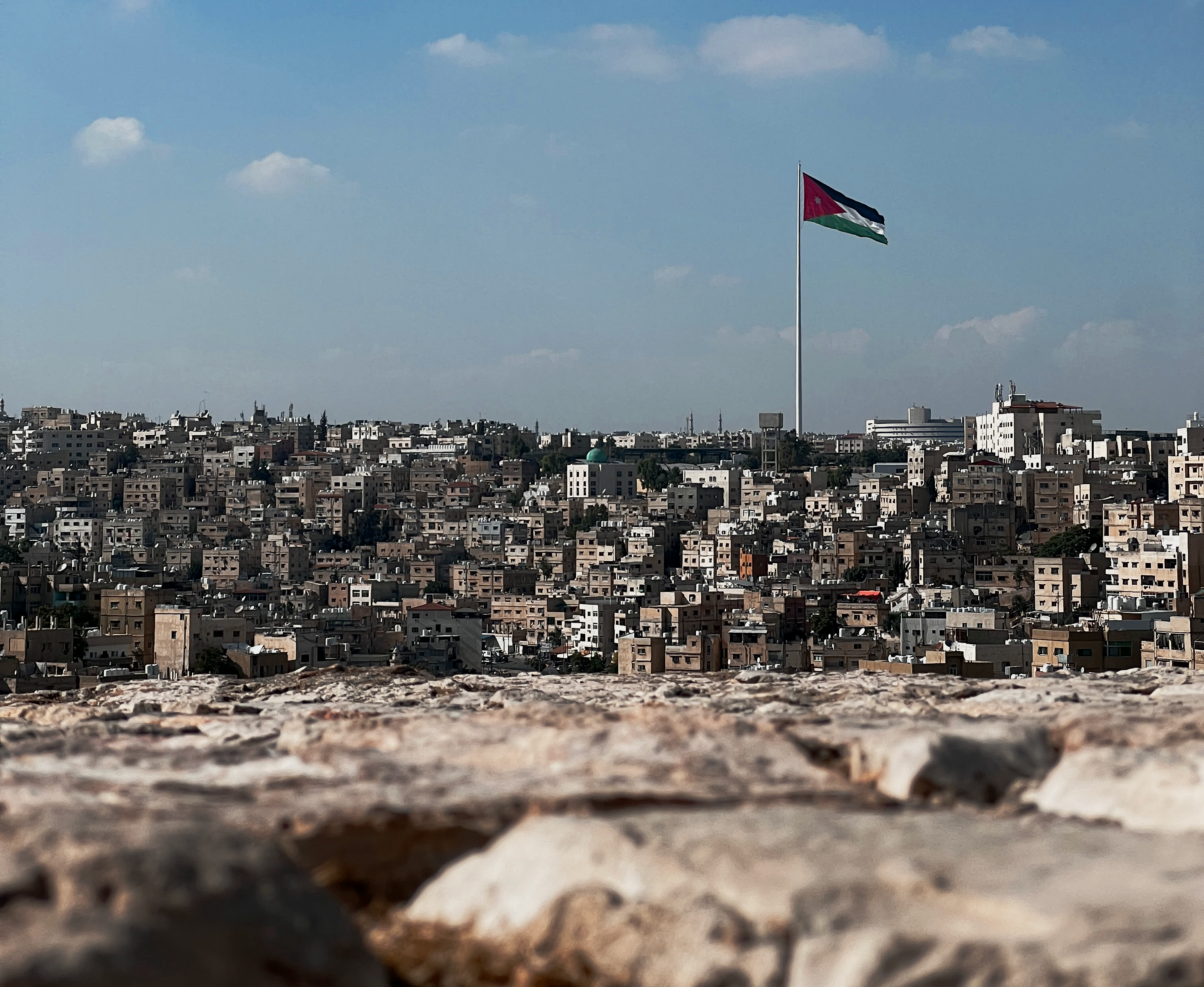
When visiting a Jordanian home, you mustn’t have less than three cups of coffee. The first cup designates you as their guest. The second shows your appreciation and fondness of their brew. The third signifies a mutual promise to protect one another should you ever need it.
Jordan is in dire need of protection. With the ten detainees released between the US and Iran last week, the Middle East lies at the center of the world’s political balance. Bordering Israel, Syria, Iraq, and Saudi Arabia, Jordan deserves broadened support and funding from the US in order to maintain stability throughout the Middle Eastern region.
In July, I spent a month in a study-abroad program in Jordan. Walking through the vibrant streets of Amman, the nation’s capital, it is impossible to sense the turmoil less than 50 miles away. But whether you ask your waiter, taxi driver, or street vendor, few are Jordanian. Many are Palestinian; others hail from Syria, Lebanon, Kuwait, or Iraq.
According to Dr. Raed Al-Tabini, the Academic Director of the School for International Training’s Jordanian branch, Jordan is the “beating heart of the Middle East.” 1 Over 29% of Jordan’s population are refugees,2, 3 a number achieved by the monarchy’s open-door policy. While such a stance is unheard of in the West, my homestay family appeared confused when I pressed them, asking me, “where else are they able to go?”4 This altruism is reflected across everyone I meet, whether or not they are one of Jordan’s 3.1 million refugees.3
Jordanian generosity ends the moment I step in the shower. With its southern regions receiving less than 4 inches of annual rainfall,5 long showers mean running dry your government-dictated weekly ration. The water crisis has worsened with Jordan’s influx of refugees, and when combined with its startling 17.87% unemployment rate,6 illustrates the extent of Jordan’s struggle to support those in desperate need.
Conversations with Israa, a Syrian refugee, gave a face to this reality. Her dreams of university were crushed the moment bombs rained down a mile from her suburban home. Her family was broken in an instant; some were murdered, others fled to Germany and Europe while she escaped to Jordan. After crossing the border, Israa became completely reliant on foreign aid.
While Jordan accepts refugees daily, the West’s decreasing support for Jordan has exacerbated food insecurity. Syrian refugees only receive 15 JD – approximately $21 USD – for food each month.7 People like Israa bear the brunt of this blow, but its effects are felt worldwide.
Jordan is the eye of the storm in the Middle East; the balancing act against the turmoil surrounding it. But given its lack of international support, its efforts cannot be maintained. Many experts refer to Jordan as a key source of stability in the Middle East. By failing to support Jordan, we jeopardize not only millions of lives abroad, but millions of lives at home. As a nation, it is imperative that we strengthen our support of Jordan’s relief efforts as a means to protect everyone involved.
At an individual level, it is even more critical that we back Jordan. With its ever-growing tourism sector, avid explorers can directly support Jordan with a visit to its stunning beauty and rich history. For everyone else, a myriad of NGOs provide a lifeline to refugees like Israa. All it takes is the price of your morning coffee. All it takes is offering them that third cup.
NGOs
[1] Al-Tabini, Raed. “Jordanian Geopolitics.” Speech, The School for International Training, Amman, Jordan, July 2023.
[2] IMF. “Jordan: Total population from 2018 to 2028 (in million inhabitants).” Chart. April 7, 2023. Statista. Accessed September 22, 2023. https://www.statista.com/statistics/385455/total-population-of-jordan/
[3] UNHCR. “Refugee Population by Country or Territory of Asylum – Jordan.” Chart. World Bank. Accessed September 21, 2023 https://data.worldbank.org/indicator/SM.POP.REFG?end=2022&locations=JO&start=1960&view=chart.
Note: This chart uses the widely accepted definition of refugees and asylum seekers. However, because Jordan was not a signor of the 1951 Refugee Convention, much of its refugee population is not officially recognized as such by the United Nations.
[4] Subha, Lubna. Interview by Reid Hu. Amman, Jordan. July 2023.
[5] “Climate of Jordan.” Britannica. Accessed September 22, 2023. https://www.britannica.com/place/Jordan/Climate.
[6] World Bank. “Jordan: Unemployment rate from 2003 to 2022.” Chart. June 29, 2023. Statista. Accessed September 22, 2023. https://www.statista.com/statistics/385565/unemployment-rate-in-jordan/
[7] “Tight Funding Forces WFP to Reduce Food Assistance for Syrian Refugees in Jordan, Including in Camps.” United Nations World Food Programme. Last modified July 18, 2023. Accessed September 23, 2023. https://www.wfp.org/news/tight-funding-forces-wfp-reduce-food-assistance-syrian-refugees-jordan-including-camps.
Leave a Reply