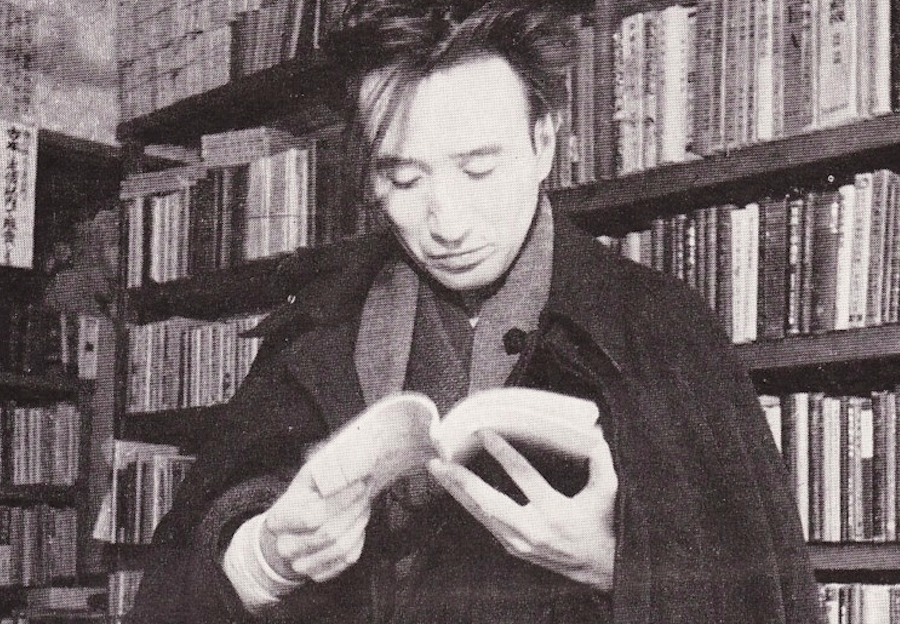
Shūji Tsushima better known by his pen name, Osamu Dazai, was a deeply troubled man. Despite being one of the most prolific Japanese authors of all time only a handful of his books are available in English, despite this his writing has still made a profound impact on international audiences. Dazai’s immense popularity is in large part thanks to his narratives exploration of the darker side of humanity.

No Longer Human serves as his most popular novel, a semi auto-biographical depiction of disillusioned Japanese youth. The book is written in a matter of fact tone, devoid of flowery language, yet despite this manages to have a kind of twisted sense of romanticism. Among younger readers No Longer Human has sparked some controversy. The protagonist is simply put not a good person, all of his worst traits are laid bare in the narration and little is done to redeem him. Hypocrisy, misogyny, and abuse run rampant during the story’s progression. So why is the book so widely regarded? Who wants to read nearly two hundred pages about some awful guy doing awful things? It’s easy to take this mindset. It is very easy to dismiss the book and shame it for seemingly endorsing all these terrible actions. But the real power in No Longer Human comes as the reader is forced to bring a mirror to themselves.
No Longer Human was deeply influenced by Dazai’s own suffering. Dazai was plagued with a number of physical and mental illnesses throughout his life, turning to alcoholism and adultery to cope with his troubles. The author made several attempts on his life, successfully taking it on June 13th 1948. This story is mirrored nearly exactly with the upbringing of the protagonist of No Longer Human. Still it does not matter. Whatever reason the protagonist turned out the way they did is unimportant, what matters is what they became. No Longer Human speaks to an immorality that Dazai believes exists in every single individual. Dazai’s protagonist is an aimless man. His days are filled with hedonistic recreation, mired in a thick blanket of pessimism. But above all what this protagonist faces is fear. Fear of others, fear of social connection, a fear of humans. Many readers will find the main character of No Longer Human relatable in some way or another. This sense of feeling disconnected from the human experience has become all too common, such that even even 75 years after the novels publishing it still rings true to entire generations of people. And relating to this book? It’s a depressing thing. The tone is incredibly bleak and as mentioned earlier, the protagonist is not a morally sound guy. Through depicting such raw and painful revelations Dazai crushes his readers making them wonder if there was any good in them to begin with.

Slightly less famous but also highly regarded, Dazai’s novel The Setting Sun follows a far more traditional narrative structure. Despite the language once again being simple and bleak the book is packed with nuance and symbolism layered into it’s writing. The Setting Sun tackles a character placed in an inherently incongruent world, a society that upheld traditional values despite a rapidly changing landscape. Once again Dazai tells this story in such a way that the reader can not help but feel dispirited and hopeless. Almost formulaically Dazai consistently places deeply flawed characters in a world that seems to be designed to fail it’s inhabitants. The Setting Sun is no different. In novel we follow a crumbling aristocratic family in post war Japan, desperate to cling on to the lavish lives they held before the conflict. The protagonist seems to be an embodiment of Dazai’s profound pessimism and much like No Longer Human draws heavily on his own experiences and beliefs. Though rather than being a semi-autobiographical dive into a broken man’s psyche, The Setting Sun broadens its scope. The story is largely symbolic for the decline of Japan after World War II. While being published only two years after the Japanese surrender, Dazai mourns a nation he once knew, embedding themes of death decline all throughout the story. The book is inundated with death, at every corner another tragedy seems to strike, pushing the book down further and further into a deeply depressing state. Yet it’s exactly this that makes Dazai’s writing quite so powerful. Even after nearly 200 pages characterizing exactly how little hope for the defeated Japan exists something peaks through the pain. As far as Dazai, and much of the Japanese public, were concerned the Japan as they knew it was dead. Yet the next generation perseveres. Be it through the birth of a literal child, or a rotting leaf clinging desperately to a branch Dazai offers solace. The Japan he grew up in was gone. and he knew exactly that. But even after beating this message down so thoroughly, new life peaks its head through. The cycle of the world isn’t going to stop simply because there is hardship in this life, and Dazai knows that. While not outright hopeful The Setting Sun at least gestures at the idea that maybe the next generation will be different. Perhaps things will change, or perhaps they’ll stay exactly the same. The new ideas that destroyed the old Japanese aristocracy are just that—new. It takes an overwhelmingly harsh story to capture the very human side of these historical changes. Negativity is one of the few things that can truly unite all people, and Dazai taps into it beautifully to display the nuance of an incredible tense time in history.
Very rarely will you come across an author who seems to have such little hope for humanity as Dazai. The author’s oeuvre is filled with writings that focus solely on the worst parts of the human race. Everything in his writing seems to be perfectly crafted to make people want to give up hope. Utilizing a writing style that dampens the mood on it’s own and characters that force the reader to question if there was any good in themselves to begin with. As a result Dazai is one of the most unique authors in the world, tackling subjects at an angle that is rarely seen. His mastery of tone in all facets of writing is unorthodox but impressive, and his unrelenting gloom can be a refreshing break from other literature.
So many authors are afraid of being too much of a downer. Of being endlessly gloomy. But Dazai has managed to harness this and use it to drive his stories home. Giving voice to skepticism Dazai has accomplished the feat of inspiring readers to look at themselves and their world far more critically.
Leave a Reply