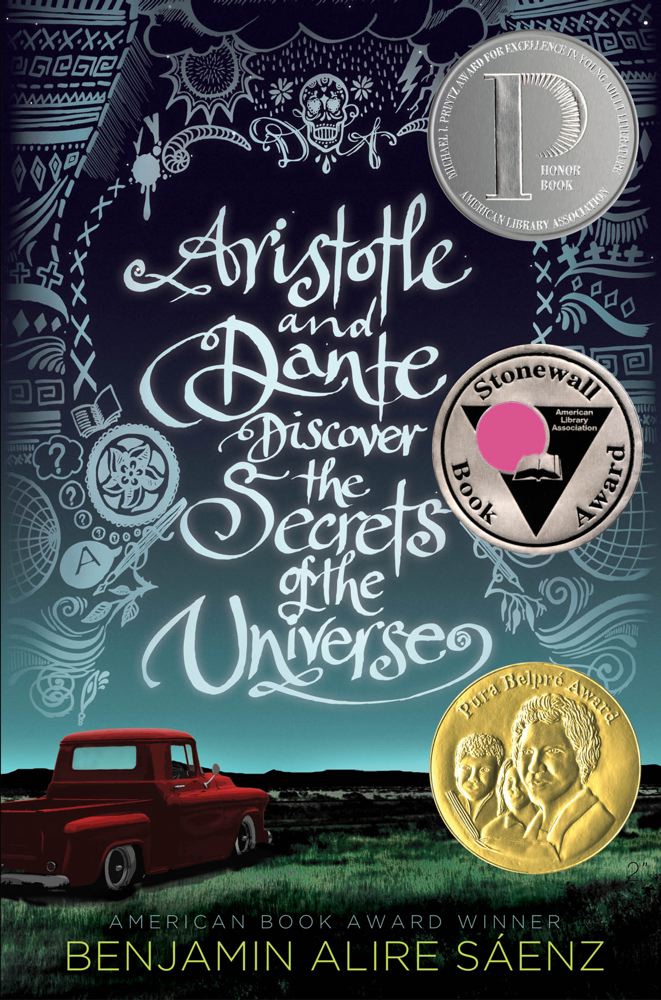
“Another secret of the universe: Sometimes pain was like a storm that came out of nowhere. The clearest summer sun could end in a downpour. Could end in lightning and thunder” (Sáenz). In their path to discovering the secrets of the universe, friends Aristotle and Dante stumble across the brevity and unpredictability of life, as well as the necessity to enjoy it before it’s over.
Benjamin Alire Sáenz is an American poet and book writer, and the author of the award-winning young adult novel Aristotle and Dante Discover the Secrets of the Universe. This workof realistic fiction takes place in the summer of 1987 in El Paso, Texas, and features two independent yet unique male protagonists. Aristotle, who goes by Ari, meets Dante at the local swimming pool, where the latter offers to teach him how to swim. That experience sparks a friendship where “being together is as easy as breathing,” and both boys learn from each other, about each other, and about themselves. Their path to discovering the “secrets of the universe” is tumultuous, and each one’s struggle with identity predominates throughout.
Although the author prioritizes self-acceptance and enjoying life for what it is, the writing lacks flow and use of appropriate literary devices. Dialogue, often consisting of pages of banter between two people, is usually dry and full of cumbersome, unpoetic repetition. In a morning discussion with his mom, Ari casually throws out his pretend plans of joining a gang, to which his mom says, “’That’s not funny.’ ‘I’m Mexican, isn’t that what we do?’ ‘Not funny.’ ‘Not funny,’ I said. ‘Okay, not funny’” (Sáenz, 8). While occasionally employing this succinct and light way of writing is a refreshing contrast from the book’s deep message, the repetitiveness that perpetrate most dialogues creates an impression that the protagonist struggles with conversation, requiring constant clarification. The dialogue isn’t the only thing that appears out of place and awkward. In the world of fifteen-year-old boys, some amount of crude humor can be excused; yet, vulgar “jokes” – such as startling profanities that appear out of nowhere – pierce the narrative, halting the action as the author describes the utter amusement Ari and Dante extract from these moments. These issues, along with choppy sentence structure and a seemingly monotone voice, left me with the impression that portions may have failed to achieve a refined potential.
Despite the flaws, Ari’s lessons, stories, and the truths he uncovers along the way stand out. As an adolescent questioning his sexuality, Ari enables readers experiencing similar feelings to connect with him. I enjoy how Sáenz explores multiple aspects of the LGBTQ+ experience through the juxtaposition of Dante, who is secure in being gay, and Ari, who can’t reconcile this situation and accept himself for who he is until the story’s end. This rejection of identity highlights the inner turmoil faced by many who deny their sexual tendencies for fear of upsetting the status quo. In addition to LGBTQ+ issues, Saenz’s story delves into multiple bonds between characters – those of mother and son, father and son, best friends, and the unspoken connection between distant siblings (another “secret of the universe” uncovered along the way). Through conversation with Dante, Ari begins to acknowledge and embrace the depth of connection he has with his parents, an aspect he has chronically been more reserved about. Perhaps even more difficult is defining Ari’s relationship with Dante, one that eventually blossoms at the cost of an accident and tense periods of time for all characters involved in the story. This perfectly encapsulates Sáenz’s construction of a narrative that addresses many topics at once, much like we constantly pursue knowledge in our own lives.
Ultimately, taste in literary style is largely subjective, while the tangible and genuine representation of two Latinos is an objective, positive, and vocal statement. Sáenz’s writing is powerful; as evidenced by thousands of positive reviews, he has reached so many through this story. Sáenz gives readers a glimpse into the life of a boy whose experiences were deliberately obscured by popular media for decades, the genuine and unfiltered morale creating an impact no possible criticisms in writing style could eliminate.

Leave a Reply