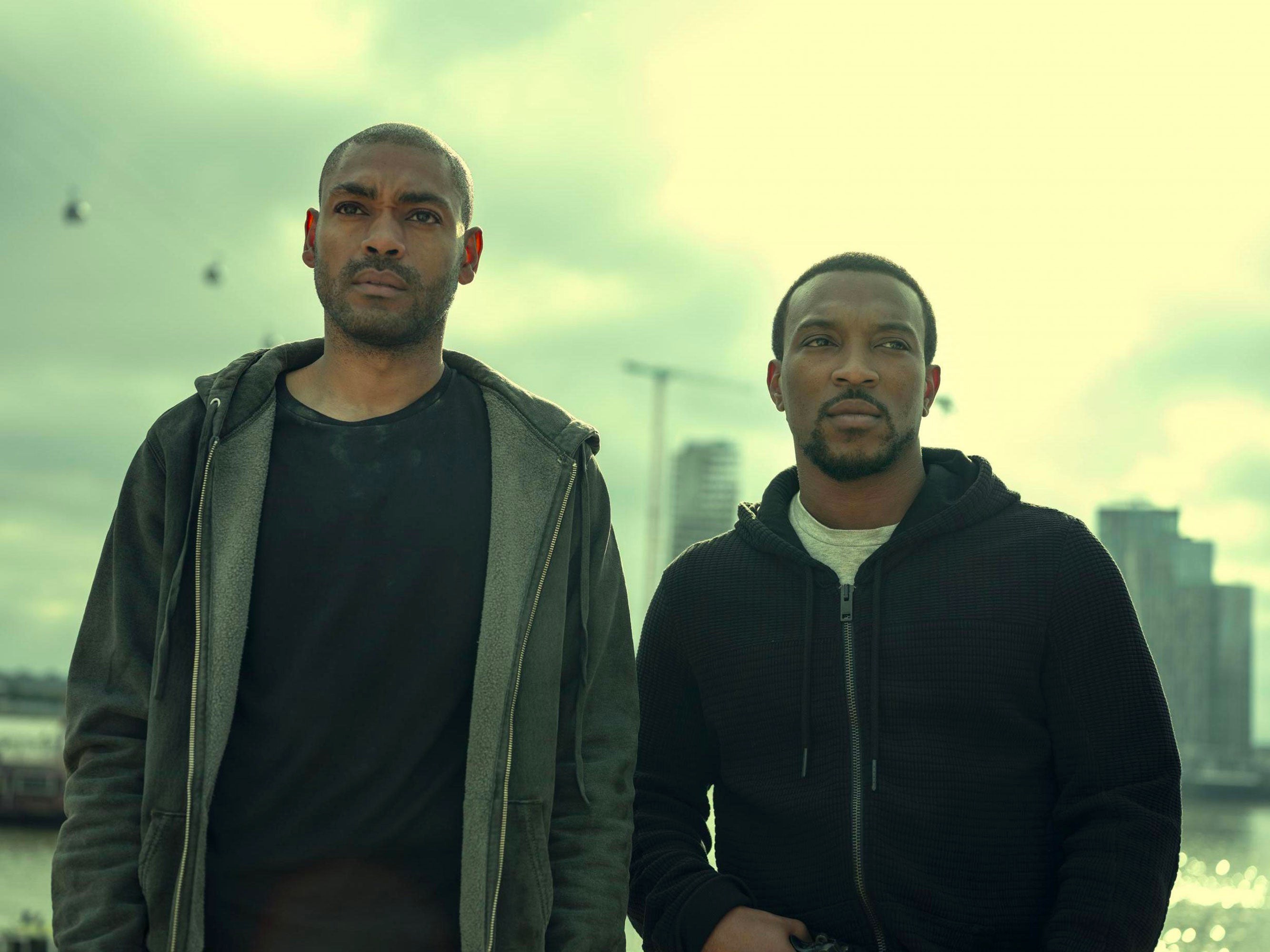
Netflix recently released the much anticipated fifth and final season of the hit crime drama Top Boy. The show was initially released in 2010 in the UK and achieved mild success. However, Canadian rap star Drake was a major fan of the series, often posting about it on social media. He got in contact with the show’s main cast to pitch a revival of the series to Netflix, who agreed to produce a season 3 in 2019. With Netflix came a major improvement in production quality, and the show soon took the UK by storm.
The show stars around Dushane and Sully, two partners who run the East London drug gang Summerhouse. Dushane and Sully have a powerful army at their disposal and are willing to go the length to run the streets. However, as competing gangs emerge, loyalties are tested, and Dushane, Sully, and a host of other characters find themselves questioning the cost of victory.
From the genuine acting, down-to-earth writing, and nail-biting tension, Top Boy has everything you would expect from a hit TV show. Yet, what makes the show ground breaking is its portrayal of British gang culture, and more broadly, Black British culture. Never before has the British public been exposed to a show with an all-black cast that remains so unapologetically true to its identity. Top Boy shines a light on the underrepresented working-class immigrant communities of East London, raising awareness about prevalent issues in these areas, as well as breaking stereotypes by revealing the multitude of identities and experiences that comprise these communities through a set of complex characters.

The creator of Top Boy, Ronan Bennett, has mentioned how when first making the show in 2010, authenticity was a major focus. Bennett first got started by recruiting talents such as Ashley Walters, Kano Robison, and Jasmine Jobson, all of whom were raised near the London Borough of Hackney, the main setting of the show. By casting a crew that accurately represents the background in which the show takes place, Bennet allows for these black actors to challenge notions about what stories are being told on screen.
Firstly, the dialogue of the show reflects the slang that is commonplace in these communities. Phrases like “wagwan” (what’s up), “peng” (attractive), “mandem” (friends or associates), and “gylaldem” (a group of women and girls) appear often, and when commenting on the show’s unique script, Michael Ward, the actor for lead character Jamie, said that “What’s funny is that this is how we actually speak off camera. Like the director isn’t asking us to act any differently. It’s totally genuine what you see [on film].” This way of speaking arose as a result of Caribbean and African immigrants shaping the local dialect through their native languages, creating a form of English known as Pigdin English. Previously, these dialects were restricted to the immigrant dominated areas of working-class London, but the popularity of Top Boy has made it common for young teens across the UK to greet each other with “wagwan” and refer to their friends as the “mandem”.
Jaq, a black, queer, male presenting lead female character, is one of the show’s main highlights. She is introduced in the beginning of season 3, where she assists in running Summerhouse’s operations while Dushane is in Jamaica. Her nuanced identity is one rarely seen on TV and her life as a drug dealer challenges how characters in her role are normally portrayed. On one hand she is the stereotypical ruthless dealer, exerting many of the same violent tendencies as Sully, Dushane, and other male characters in the show. Yet, she frequently faces homophobia and discrimination in her already volatile work environment, which causes her at times to question her identity. Jaq’s complex character is one reason why Top Boy is so revolutionary; many viewers are able to relate to her struggles and successes, but her queer identity is never what defines her in the show. Rather, it is how she faces adversity and how she navigates her world as a queer person that makes her such an interesting character.

And Jaq is not the only multi-faceted character in the show. Jamie is a young, up-and-coming dealer who, like Jaq, is introduced in season 3. Once Dushane returns from Jamaica and teams back up with Sully, the group finds out about the rise of Jamie and his gang, the ZT’s, or “Zero Tolerance”. And Jamie is even more ruthless and driven than the younger versions of Dushane and Sully seen in seasons 1 and 2; in one scene he throws a rival dealer off an apartment balcony, landing him right in front of his friends.
At first, Jamie appears to be merciless, doing whatever he can to climb up the food chain. Yet, it is revealed that Jamie’s parents died a few years ago and he lives with his two younger brothers, Aaron and Steph. Jamie supports his brothers through his drug money, and a compassionate, sensitive side of Jamie is displayed when he is with his brothers. He is supportive of Aaron as he makes his way through Uni, and he acts as a father figure to Steph, who struggles with the reality of losing his mom and dad. In one of the show’s most touching scenes, the three brothers sit on a park bench on the day of their mother’s death, with Jamie wrapping his arms around both of his brothers as they reflect on their memories with mom. Another memorable scene happens when Jamie punches two other gangsters who are about to jump Steph, as he says the iconic line, “You lot don’t want this smoke.”
Jamie’s role as caretaker and drug dealer frequently collide. One moment he is embracing Steph, the next he has a gun to someone’s face. Ultimately, Jamie is caught in a never-ending loop, as he is always looking to provide more for his family, but in doing so he puts both himself and his brothers at risk. Through this dilemma, the show explores the morality of Jamie’s character. Viewers are forced to decide whether or not Jamie’s actions are justified given that all he wishes to do is protect his brothers. A major question that rises is whether Jamie is truly in the business for his family, as he claims and believes he is, or for the glory that comes with being a high-end dealer. There are pivotal moments in the show where he has the option to cut back on his operations and settle down with his brothers, ensuring their safety. Yet, determined to solidify his position, Jamie remains ambitious, and his actions result in disastrous and unforeseen consequences.

What separates Top Boy from other crime dramas is that the show’s characters are a product of their environments. Shows like Breaking Bad and Ozark also have characters that are simultaneously cold-blooded and complex as they pursue their criminal activities while balancing the needs of their families. However, guys like Walter White and Marty Bryde are all “outsiders” in their respective organized crime worlds; they are upper-middle class white men who have achieved stable positions in society. The audience, many of whom who can already relate to Walter and Marty from the start of the show, can better understand where the morality and intentions of these characters arises from, and due to implicit biases, viewers are more likely to sympathize with them. On the other hand, characters like Dushane, Sully, Jamie, and Jaq all originate from the inner city, and do not reflect the lived experiences of the majority of the British population. Audiences may have already developed preconceived notions about gang life through the news and other forms of media, but through its authenticity and complexity, Top Boy allows audiences to relate to people like Dushane and Jamie. Ultimately, while season 5 may be the final season of Top Boy, its legacy will live on.
Works Cited
Harry, Aaliayah. “How Top Boy Changed Black British Culture Forever.” Grazia, 7 Sept. 2023, graziadaily.co.uk/life/tv-and-film/top-boy-has-changed-black-british-culture-forever/. Accessed 25 Oct. 2023.
Yawson, Jude. “Farewell, Top Boy: The UK Crime Drama That Shifted Culture Forever.” Complex UK, 13 Sept. 2023, http://www.complex.com/pop-culture/a/jude-yawson/farewell-top-boy-the-uk-crime-drama-that-shifted-culture. Accessed 25 Oct. 2023.

Leave a Reply