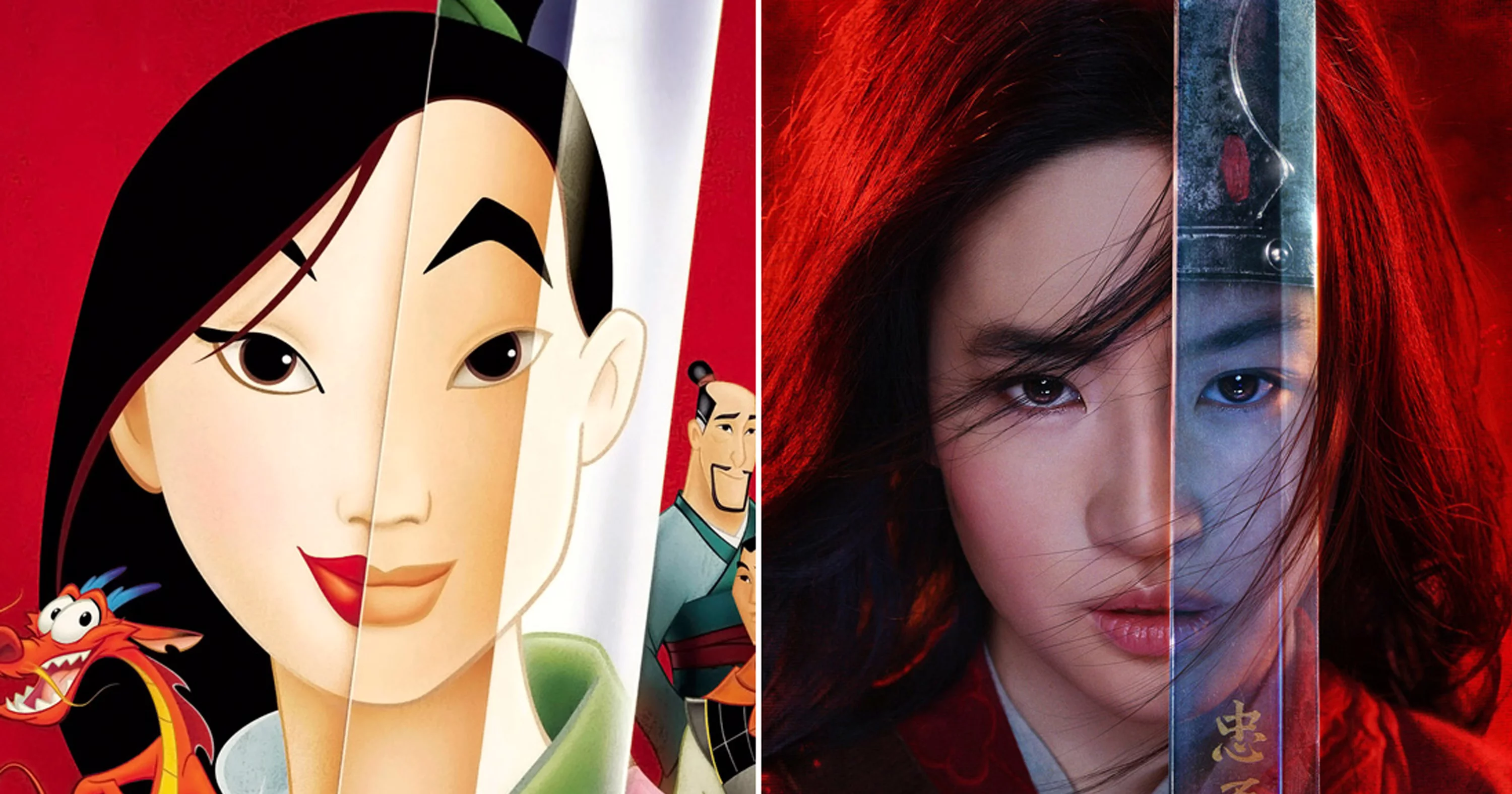
In 1998, Disney came out with the hit movie Mulan, depicting a courageous woman filling her sick father’s place in the military. It was critically acclaimed, reaching sales as high as $304M. But when Disney released Mulan again in 2020 as a live action remake, it’s safe to say that it wasn’t as well received as Disney would have liked it, with COVID-19 circumstances weighing the sales down to only $70M and IMdB only rating it at 5.8/10. But where did it all go wrong?
First, let us take a step back and consider Disney’s history with live action remakes, which began with the Jungle Book in 1994, followed by an assortment of our favorite animated movies being made into remakes, with The Lion King (2019), The Beauty and the Beast (2017), and Aladdin (2019) having the highest overall sales. These three films all have one specific thing in common: they all stay loyal to their original plots, albeit with minor plot changes, leaving I, the viewer and audience, with a sense of fulfillment after viewing each of these films after seeing such a wonderful adaptation.
Unfortunately, the same cannot be said for the 2020 adaptation of Mulan. Amidst a terrible pandemic that rendered us all useless and hanging at home, the remake of my favorite Disney film should have been the height of excitement for twelve-year-old me. Instead, I left the theater feeling disappointed and angry at the upsetting way directors messed up the 1998 rendition of Mulan. So, let us take a deep dive and see where it all went wrong.
First, the blaring absence of one of the original film’s most beloved characters: Li Shang. In 1998, Li Shang was depicted as Mulan’s captain and love interest. Well-known for the iconic song, “I’ll Make a Man Out of You” which depicts Mulan’s journey from a novice soldier to an outstanding one, capable of taking on anything. Throughout the song’s montage of Mulan’s challenges and perseverance in her training, Li Shang acts as crucial mentor, prompting and guiding Mulan’s character development and success as a soldier. However, beyond his support of Mulan’s growth on the battlefield, Li Shang is important in the 1998 movie for a completely different reason – his LGBTQ representation. With Li Shang’s romance with Mulan and closer than usual friendship (historians would say they were just friends) with Mulan’s male alter-ego, Ping, he was heavily implied to be canonly bisexual in the 1998 film.
Unfortunately, Li Shang was cut from the 2020 adaptation. The director, Jason Reed, cited the #MeToo movement as the reason, explaining that “having a commanding officer that is also the sexual love interest was very uncomfortable, and we didn’t think it was appropriate”. Reed’s excuse was met with criticism from viewers all around, as many believed it to be a cover-up for removing a widely recognized bisexual character. Removing Li Shang from the film became another hit to Disney’s already lacking LGBTQ representation in media.
Beyond the removal of Li Shang, the live action adaption also suffers from fundamental deviations off its central theme. The main theme in the 1998 rendition involved uplifting females with the clear message that anything a man could do, a woman could as well – perhaps even better. This was depicted through the training camp arc where Mulan, disguised as a male soldier, Ping, trains her best to keep up with and eventually outpace her fellow soldiers, earning the respect of her male counterparts. At the climax of the film, it is Mulan who, using her cleverness and skill, becomes the one to ultimately defeat the main villain, Shan Yu. However, so many plot changes were added to the new 2020 adaptation that the entire message of the film was erased.
In the beginning of the film, Mulan is shown as a child possessing magical qualities called “Chi” (or qi in accurate pinyin), which is described as a sort of magical aura known to augment the strength of a warrior. And for whatever reason, Mulan has a LOT of it. She’s shown doing all sorts of epic parkour on the rooftops as a child, doing cartwheels this way and that. This special detail pops up a lot in the film, as now, Mulan’s main purpose is to synchronize and use her Chi to the best of her ability. Instead of working hard and struggling to get to the top, Mulan in 2020 breezes through with her special powers, entirely undermining the entire message that 1998 broadcasted to young female viewers.
But just to place the cherry on top, not only does the implementation of Chi alter the main theme, but it also fundamentally changes Mulan’s character and development. In 1998, Mulan was shown first as a naive girl who forced herself to grow up for her father. The audience gets to laugh and cry at her human struggles as a warrior and rejoice in her victories at the end of the round. Overall, she’s a relatable character that serves as a role model for young girls across the world. But in 2020, with the addition of Chi, Mulan is shown as powerful and strong from the start, without a need to struggle. There is nothing for her to grow from, besides strengthening her already existing powers. She’s shown throughout the film as devoid of much emotion, a stark contrast to the lively girl from 1998. Mulan’s Chi undermines the feminist message of the original film, which before showed that the strength women could surpass men, now emphasized that a woman could not be stronger than a man with her own merits, needing magic to succeed.
It is really no wonder that the 2020 Mulan adaptation was not the hit Disney thought it was going to be. With the cut of a representative character and original themes and messages undermined, at the end of the day, it is safe to say no one’s going back for a rewatch.
Sources used:
https://www.businessinsider.com/disney-lgbtq-representation-mulan-remake-li-shang-2020-9

Leave a Reply