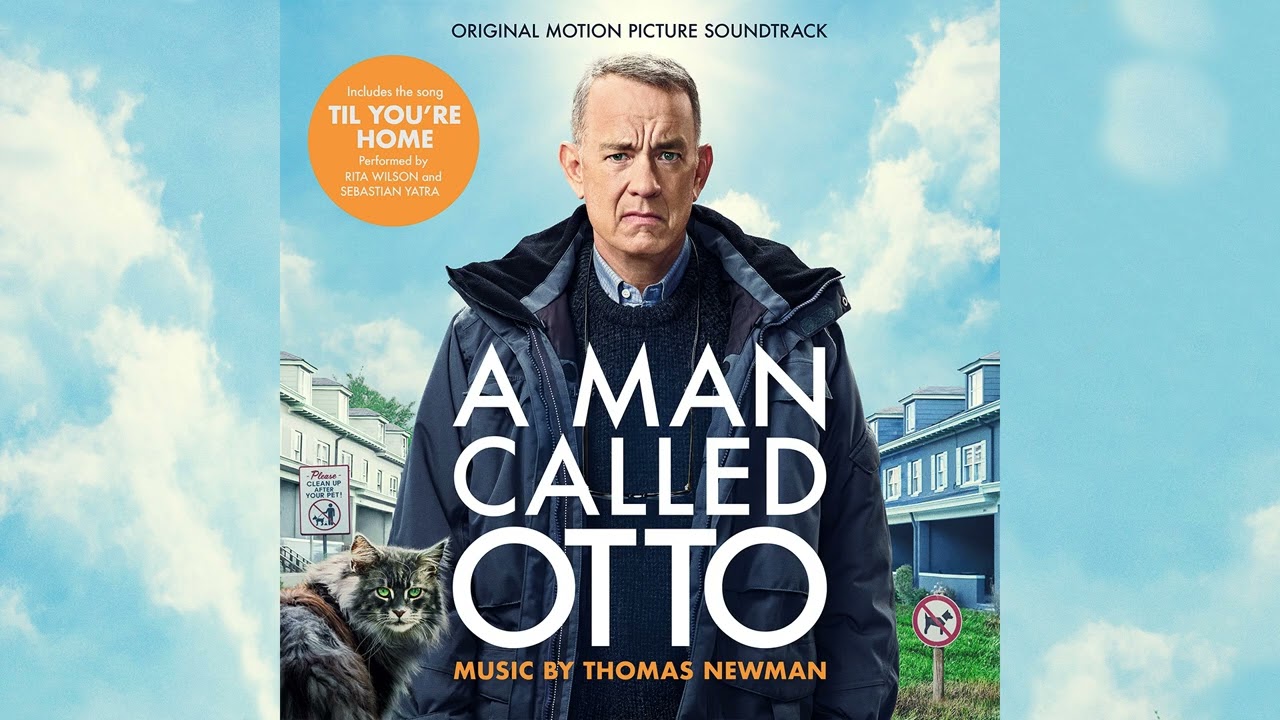
A beautiful story of love, loss, and grief. “A Man Called Otto”, starring Tom Hanks, is the most authentic portrayal of dealing with grief and suicide. Adapted from the Swedish book, “A Man Called Ove”, Otto (Tom Hanks), initially seems like your average cranky neighbor living in Pennsylvania. Yet, as his story progresses, we can understand his backstory.
After losing his wife, Sonya, in a tragic accident when they were young, Otto lost his purpose in life. Severely suffering from depression and grief, he closed himself off from society, rarely interacting with neighbors. Much to the chagrin of others, Otto constantly refuses to compromise. Why must Otto pay for six feet of rope at the local hardware store when he only wants five? Why should he lend a ladder to neighbors he has never met? Otto begins to have deep suicidal thoughts, as he cannot bear to live without Sonya. Around the beginning of the film, he is depicted attempting to free himself from his loneliness, he tries to hang himself, but the rope breaks, giving him air.

He continues to try to commit suicide, but as if he was meant to live, each attempt fails. Interrupting one of Otto’s suicide attempts are his new neighbors, bubbly Marisol, friendly yet irresponsible Tommy, and their two daughters, Abbie and Luna, asking Otto for help moving in. Though he does so begrudgingly, he takes a liking to them. Otto reluctantly helps the neighbors with moving in upon their request but ends up falling in love with their family. More than their family, Otto ends up making a friend in Marisol. Soon after they move in, Otto realizes that Marisol does not know how to drive. After a lot of begging, she convinces him to instruct her. In return for his teaching, Marisol cooks for him, inciting their friendship. Otto begins to spend more time at their house, playing with Marisol’s daughters, and babysitting them. He even learns some Spanish because they speak it!

Finally, he has found new meaning in life and begins to thrive again. Ultimately, as Otto passes in the final scene, he leaves his estate and car to Marisol. She represents his family.
Family is something all humans depend on. Family provides a shoulder to lean on, someone to dry your tears, someone to embrace. After losing Sonya, Otto managed to find another family in Marisol, Abbie, and Luna.He becomes Abuelo Otto to Abbie and Luna. They are his family, and he is their family. They each depend on one another. Marisol and her daughters serve as the foil to his character, opposing his closed-off, negative attitude.
Personally, I found the film incredibly touching. In the final scene, Marisol, Tommy, and their children are shown at Otto’s grave, adjacent to Sonya’s, creating a union between Otto’s two families. A letter begins to be read out in Otto’s voice, and it is shown to be the letter he left for Marisol just before he passed. The camera cuts to Otto’s grave, sitting adjacent to Sonya’s. The note culminates with a signature: “Abuelo Otto”. The name Abbie and Luna gave him. The name he grew fond of. The name his family gave him.

Tears of joy and sadness rolled down my face as I watched this scene. Otto had finally gotten what he wanted, but the world couldn’t bear to lose him. He was loved. Especially in scenes where Otto experienced flashbacks to losing Sonya, I could relate to his struggle with grief. I truly believe that there isn’t a single film that can express the raw grief demonstrated throughout “A Man Called Otto”. Each frame is intentional to the plot. As I watched this film, I was reminded of how universal grief is to the human experience. It is our nature to give up after a tough loss, but Otto’s story of perseverance is inspirational. He manages to stand back up after he’s been knocked over. This film is a story of resilience, as we see Otto battle with his grief, ultimately learning to love again. After my grandfather passed away, I felt lost, as if my life compass had been misaligned. This film assisted me in dealing with my pain because of the strong relatability factor. I found “A Man Called Otto” incredibly heartwarming and touching, concluding with a scene of happiness and sadness, invoking a deep bittersweet emotion in viewers.
This film also brings up the relevant issue of elder isolation. As people age, their friends will begin to pass away, and their children will grow up and leave the nest, causing them to suffer from great loneliness. This film is a demonstration of how once Sonya passed away, there was no one left in his family. He was alone. No one was there to help him with his grief and depression. No one was even there to stop him when he tried to commit suicide on countless occasions. This loneliness is the reason for grandparents always wanting to speak with their grandchildren on the phone. It’s because of their loneliness and isolation from their loved ones, that they feel a strong desire to spend time with others. I deeply regret the times that I did not feel like talking to them on the phone, or tried to push the phone away, as I can never create those times again. I’ll never be able to talk to my grandpa again, and even if I spoke with him a lot, I am still left thinking of the times I did not. This film gave a lot of the older community relatability to Otto’s life and lifestyle. They felt like they could bond and understand the character because they too feel isolated from society. The New York Times states the senior community turnout was “about 46 percent of attendees over the age of 55” (The New York Times). Of all the ticket buyers, “the film received a 96 percent positive audience rating on Rotten Tomatoes” (The New York Times). Even after receiving great amounts of praise from a large portion of the community, “A Man Called Otto” was not nominated in any category for the Oscars. However, I believe it should be nominated due to its uplifting nature and how it shines light on those of us who feel isolated from society. It is a reminder that everyone is capable of living again.
To me, the most powerful aspect of “A Man Called Otto” is the music at the end of the film. “Till You’re Home”, an original song by Rita Wilson and Sebastian Yatra, truly sums up Otto’s struggle to live.

The song opens with the line “Sun through the shadows, light through the door, voice like an echo, I can’t hear anymore”, referencing how to Otto, Sonya was the light of his life, and how she could brighten his world through a closed door. However, when he believed that her voice would always echo with him, it disappeared. Yet the emotional epitome of the song comes at the chorus. “And I finally see how your love is the best of me, yeah there’s so much I want you to know. Guess I’ll wait till you’re home”. Otto could not see the brightness and color in the world without Sonya guiding his life. His life depended on her love, and without it, he felt lost. Her soul lingers with Otto as he waits for her to come home, always remembering the love of his life, yet never seeing her again. Throughout this piece, the accompaniment is made of optimistic music, as if it is hinting at how the good has not been completely vanquished from Otto’s life. Additionally, the lyrics are quite heavy, while the melody is light and serene, giving the piece a beautiful contrast and complexity. This song is an amazing representation of Otto’s love for Sonya, and how he can never forget her. He’ll wait till she’s home.
The New York Times Article About Audience Ratings:


Leave a Reply