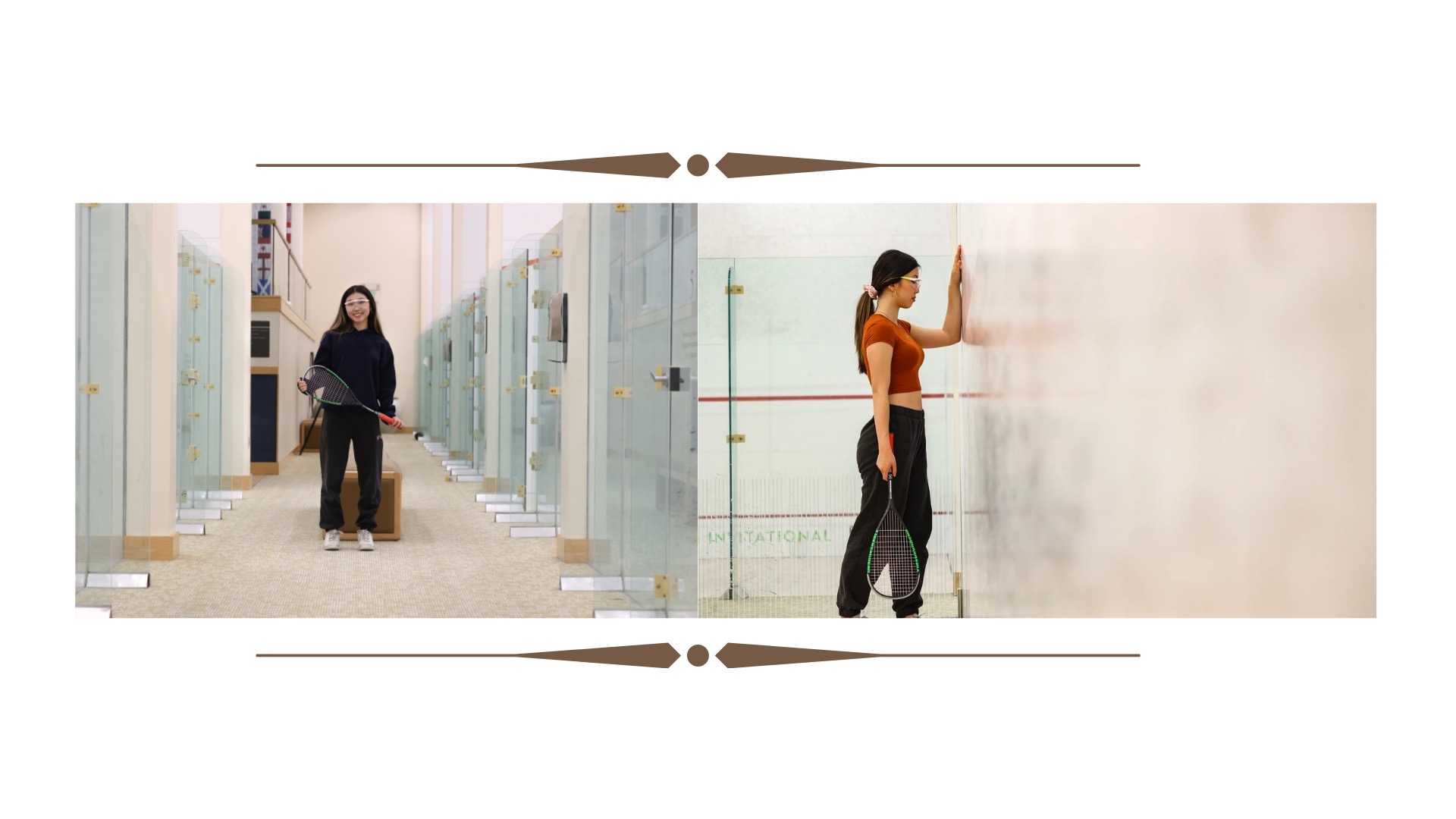
A look into the college recruitment process
Data from the NCAA (National Collegiate Athletic Association) notes that for all sports, the percentage of athletes moving from high school to the NCAA is only about 6%. Clearly becoming a college athlete at any level is difficult, but with 6 years of incredible determination and hard work, Karis Sun has emerged into an extraordinary squash athlete heading to Hamilton College in New York!

The Beginning:
Squash is a racket sport played in a four-walled court with a small rubber ball. Karis originally played many sports like basketball, soccer, gymnastics, and even fencing. One day, her neighbor told her to try squash with her, and although her neighbor ended up quitting, Karis notes that “squash just stuck with [her]”. Karis built up great endurance and also mental strength playing squash, where she notes the importance of being able to “shake off a bad point and move onto the next,” a mindset applicable to many sports as well.
For those of you aspiring to be a college athlete or just interested in the process, reaching out to people who’ve made this leap is the perfect way to learn. I’ve outlined several key components that may be interesting or helpful to other student athletes. The categories include Tips, The Recruiting Process, Setbacks, and finally, Choosing a School.
Tips for Aspiring College Athletes:
When asked about any tips for high school athletes wanting to play in college, Karis emphasized consistency. She said, “there were times when squash was very time consuming and I wanted to try other activities, but I kept consistent with squash, which ultimately led to me being able to play in college which I’m so grateful for.” This brings up the idea of sacrifice; committing to college for a sport certainly requires prioritization and consistency, which might seem daunting, but will be worth it in the end if it is something you are truly passionate about.
Tips for Female Athletes:
Sports inequality is still prevalent, something Karis has experienced firsthand. When interviewed, Karis noted how in the male-dominated atmosphere of squash, she knows what it’s like to “feel undermined in capabilities based on gender.” Her advice to other aspiring female athletes is to “remember and acknowledge the hard work they have spent in their sport, and to feel confident in their capabilities no matter what people may say.”
The Recruiting Process:
September 1st of her junior year marked the beginning of Karis’ recruitment journey – much earlier than most other students begin the college application experience. It might be a misconception that the coaches come to you, but that’s certainly not always the case. Karis took initiative because of her passion and determination to play in college, emailing countless schools that had squash teams. She also promoted herself, making a highlight reel of top matches to send to coaches; Karis noted she also made a “‘recruiting packet’ that had information about [her] squash and academics” to provide coaches with. This is a great strategy to show off one’s skills and provide the coaches with helpful information to move the process along. Following the email process, Karis had phone calls with coaches who responded and narrowed her college list. Further demonstrating her skills, she attended recruiting camps and at the US Open last year, Karis was able to play in front of coaches she had been in contact with.
Before any of this could be officially set into motion, Karis had to tailor her skills off the court as well. Oftentimes, recruited athletes get a “pre-read,” where the school admission office reads and assesses your college application. With this, Karis noted that she had to ensure her grades and SAT met the school standard so her profile “read positively”. Like many current seniors who became busy with college apps during first semester senior year, Karis had an added workload to an already busy and stressful junior year. She notes that some schools even required supplementals for the pre-reads.
This increased workload and stress certainly paid off as Karis received offers during the summer before senior year, officially committing at the end of the summer. And with a weight lifted off her back, she has more time senior year to try new things both on and off the court.
Setbacks:
Recruitment is no easy process. Karis notes that there are many rejections as many players compete for the same spot. Karis expands on a particular setback she experienced. At a recruiting camp with many high-level coaches and players, Karis felt worried in the “high pressure environment.” She remembers the Hamilton coach “telling another player he had already picked his players for the next year,” so Karis crossed Hamilton off her list, thinking she had no chance to get in. Despite this discouragement, Karis’s roommate encouraged her to stay persistent and give the Hamilton coach her recruiting packet. If it weren’t for her persistence (and her friend’s!), Karis never would have gotten the call from the Hamilton coach offering her a spot on his team. Karis notes “the recruiting process taught me to be resilient, and to not give up even when faced with rejection,” an important message for all young athletes, whether planning to play in college or not.

Choosing a school:
It might be easy to simply focus on the athletic program during the recruiting process, but Karis made sure to factor in her preferences and academic and life goals. Although Karis received offers with more elite squash programs, an important note she made is that “squash is just one aspect of the 4 years [she] will be spending at a school.” So, because Hamilton’s academic offerings align with Karis’s pre-law goal, this school made sense for both athletic and academic reasons. Karis notes how grateful she is that squash gave her the opportunity to attend such an amazing school.
And with this, despite setbacks and moments of doubt, Karis stuck with her dream to become a collegiate squash athlete. Stay on the lookout for her next year at Hamilton College!
Sources
https://athletics.hamilton.edu/facilities/little-squash-center/8

Leave a Reply