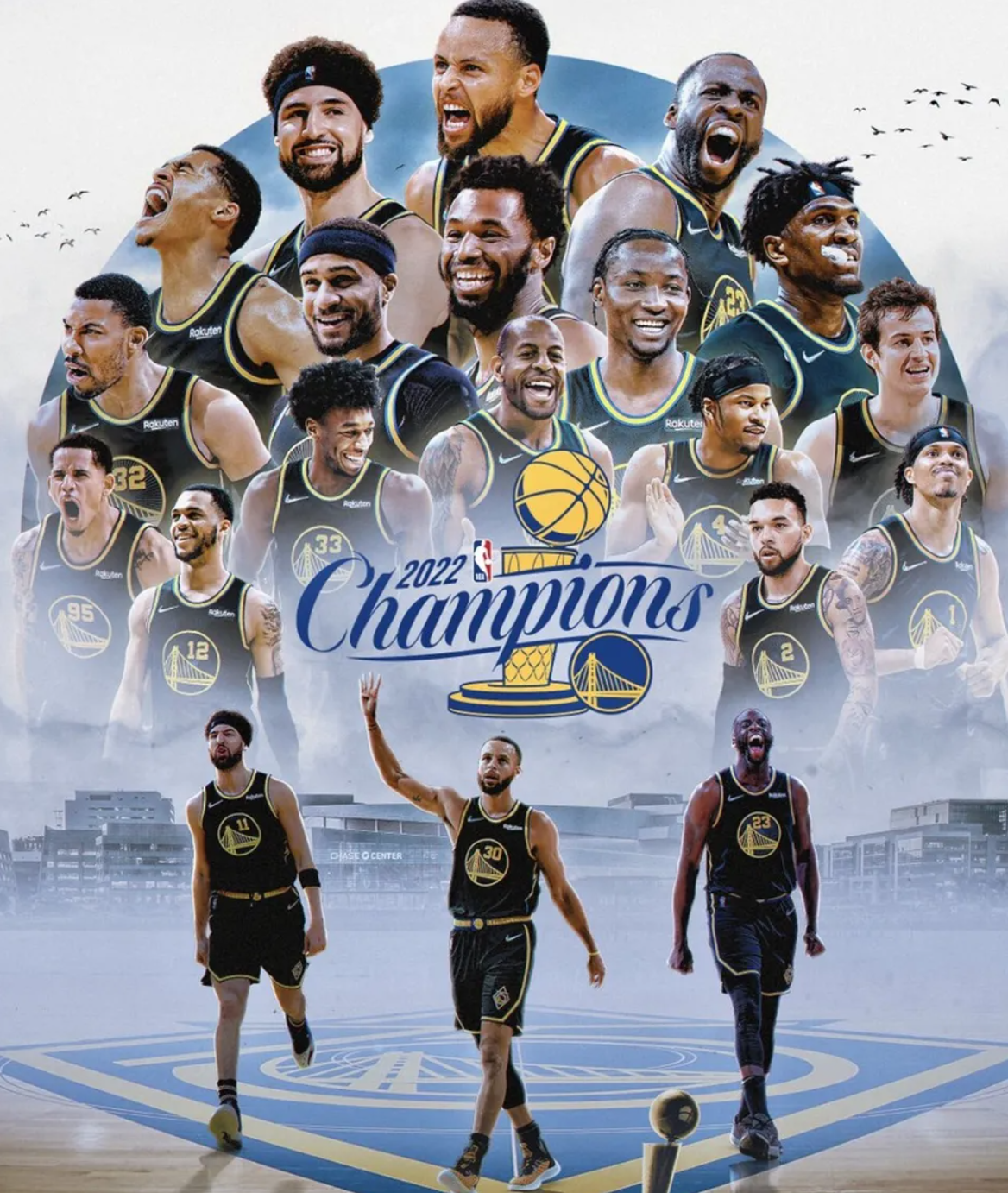
A few years ago, the Golden State Warriors were on top of the world, multiple years on end. However, lately, it seems that they have fallen into a slump. Between 2015 and 2019, the Golden State Warriors dominated the Western Conference, competing in the NBA finals every year. After this streak, they established their high position in the league. Come 2020, the world patiently awaited another domination from Stephen Curry and the Warriors. Yet, contrary to their expectation, the Warriors were the worst team in the entire NBA, only winning 23.1% of their games. This was a shock to the fans—the reign of Golden State was over. The dynasty had been overthrown. Hoping for a comeback in the upcoming 2020-2021 season, the Warriors failed yet again, as they missed the playoffs by one rank. After two poor seasons, Warriors fans did not anticipate much success in the 2022 season. But, they could not have been more wrong. The Golden State Warriors dominated the league again, taking the 3rd rank in the Western Conference and going on to win the championship in the playoffs. Fans were left wondering, what prompted this significant change in their success?

Often, one’s ego can undermine the cohesion of a team, as non-star players want a piece of the spotlight and may make poor decisions that impact the team’s overall performance. Jordan Poole, a young player, greatly contributed to the 2022 Warriors team and was critical for their ultimate victory. Without him, the opposing team would have beaten the Warriors in the finals. In that season, Jordan Poole played like a “team-player” by setting up his teammates with passes. However, come the 2023 season, Poole’s ego consumed him, and he stopped passing the ball, focusing on taking contested shots. Fueled by his fans’ hype for his performance in the previous season, Poole decided to turn the game into a one-man-show. Ultimately, this significantly impacted the success of Warriors, as they placed 6th in the Western Conference and were eliminated in the second round of the playoffs by the Los Angeles Lakers. Due to Poole’s negative impact on the team, the Warriors made him the scapegoat of their failure and rather than working with Poole to make him understand that he must be a better team player for overall success, the Warriors’ general manager decided to trade him in return for 38-year-old Chris Paul. In cutting Poole, the Warriors had failed to address the root of their problem: a lack of cohesion and teamwork. These trade errors occurred soon after the famous general manager of the Warriors, Bob Myers, stepped down from his longtime position. Once the new general manager, Mike Dunleavy Jr., was instituted, he made hasty decisions that only addressed surface-level issues, rather than fixing a manageable issue of team chemistry. In a strong hunt for victory, the Warriors general manager gave away Jordan Poole, the strongest candidate for the future of their franchise, in exchange for an older player on the brink of retirement. This trade did not benefit the Golden State Warriors, and their minimal 2024 season achievements speak to the loss caused by this hasty trade.

Drafting gives teams the best attempt in having a young roster that can last for many years. In 2020, when the Warriors had the second pick in the NBA draft, they needed a center, but instead of picking one of the best players in the draft class, they opted for James Wiseman, a rookie center who ranked low amongst other members of the draft. With high draft picks, it is expected to choose the best players in the draft, not the players that are needed for a roster. In drafting Wiseman, Golden State overlooked a potentially revolutionary draft opportunity in securing a dominant guard position once Steph Curry retires. Instead, the Warriors ended up trading Wiseman a few seasons after the draft because he did not perform to their expectations. Wasting draft picks is extremely detrimental when star players are aging and losing versatility. Every tick of the clock is a countdown to oblivion for the Warriors dynasty as their stars age and their skills decline. For example, Klay Thompson, a 34-year-old star on the Warriors, recently scored zero points in a potential season-ending game, stressing the necessity for skilled rookies.

Pressure is something that impacts a team’s success. Pressure can either push someone to victory, or pull them from it. The pressure of continuous success led the Warriors down a rabbit hole of hasty decisions and missed opportunities. With aging, players cannot win with the same simplicity as the 2010s, yet the pressure for victory is still present. Creating unattainable goals of victory results in a decrease in team morale and effort because they are unable to meet the high bar they set for themselves. Thus, the pressure of victory and domination obscured Golden State’s vision of reality and possibility for their season.
Golden State racks up suspensions for their necessary players, disadvantaging them when combating opposing offenses and allowing them to be defeated in multiple facets of the game. Draymond Green, the key defender for the Warriors, is infamous for his suspensions and ejections. In the 2010s, his defense was elite, and he was singlehandedly responsible for Golden State’s defensive success. However, recently, he has been aggressively playing defense and has actually injured many opposing players. Often acquiring ejections and suspensions for his aggression, Green’s absence to the team has caused significant losses, increasing the effort the Warriors must give to stay afloat in a league of younger players. Constantly, Draymond’s actions have caused him to be suspended, tainting the Golden State name, brand, and franchise. For example, a factor of the decline in the Warriors’ team chemistry is a fight that occurred between Jordan Poole and Draymond Green. This created a lack of unity between the players, also prompting Poole’s trade. Since Draymond is critical to the team, suspensions, ejections, and decreasing cohesion are severely detrimental to their success because Golden State cannot rival their opponents’ defenses without him.

Rather than maximizing younger players, by living in the past, older players receive more play time and cannot play with the same skillset as their prime selfs. For example, Jonathan Kuminga, a young player drafted in 2021, has only recently begun getting minutes on the court. Otherwise, he is mostly on the bench. In the past year, he has had a significant growth spurt and athletic improvement. He has become a lethal defender and strong offensive frontcourt player. By not playing him enough, they are not getting as many defensive stops and cannot maintain leads for long. Instead of Kuminga, Golden State is prioritizing their older players and giving them more minutes. Replacing their play time with Kuminga’s would greatly improve the scoring and defense of the team, ultimately contributing to their overall success. By building an offense centered around Kuminga, they would be depending on a younger, more versatile player, instead of an older, more injury-prone one.

Maybe they’ll make another playoff comeback, like in the 2022 season when everyone had lost hope. After all, it’s the Warriors. That name still means something, right?
Citations:
Leave a Reply