By: Sofy Aguilar Ehrli
Ballot Initiative 2066 did what no other ballot measure in Washington state could, it passed. Even then, I-2066 barely passed, only winning 51.7% of the vote. So, what made this initiative stand out to Washington voters? Why was it the only initiative capable of being passed “yes” by a small majority? I wanted to find the answer to these questions, however, before understanding why it passed, I needed to understand what it was.
As someone who considers herself fairly informed on US and local politics, conflicting messages about I-2066 left me extremely confused on what this ballot measure was going to achieve. Conversations with friends, family, and neighbors have comforted me with the knowledge that I am not alone in this struggle. So, let’s try to figure out what I-2066 even is, and why it passed when the others couldn’t.
What is Natural Gas?
Before we get into what this initiative was meant to do, we need to understand what natural gas is. Natural gas is a fossil fuel energy source containing multiple different compounds, the largest component being methane. The graphic below from U.S. Energy Information Administration explains the process of how natural gas is created.

In order to conduct electricity, water is boiled to create steam, the steam turns turbines, which conducts electricity. In order to boil water, you need heat, which was previously achieved utilizing coal. Unfortunately, coal is “dirty” in terms of the amount of CO2 it releases, and its harm on our lungs. Net Zero 2050 teacher, Gerald Blycker, explained that natural gas is generally seen as a better alternative because, “you get more energy and less CO2.”
However, Blycker also warned that simply because natural gas is seen as “better” does not mean it is a good place to settle. He stated, “I wish people understood that if you’re burning natural gas, you’re still releasing carbon dioxide.” It’s as if I study for my physics test for 5 minutes rather than 0 minutes. Yeah, I’ll probably get slightly better results than if I hadn’t studied at all, but I still won’t do well. I shouldn’t have a goal of studying for 5 minutes on every test simply because it’s better than nothing. Gerald added that if we ever want to reach the Paris Agreement’s goal of limiting global rise in temperatures to below 1.5 degrees Celsius, then “we have to get rid of natural gas”.
What is Ballot Initiative 2066?
Now that we understand what natural gas is, we can look into this complicated ballot measure. The purpose of initiative 2066 was to overturn the Washington Decarbonization Act, which has three main parts:
- Require PSE to report to the Washington Utilities and Transportation Commission (UTC) their plans to lower greenhouse gas emissions in their projects and explain how they will transition from natural gas to electricity in a cost-effective manner.
- Prohibit PSE from offering customers incentives to buy appliances using natural gas, and instead must educate their customers about the benefits of transitioning to electricity.
- Set requirements for how the UTC determines rates for customers of PSE
In addition to repealing the Washington Decarbonization Act, initiative 2066 would “prohibit local governments, air pollution agencies, and the State Building Code Council from prohibiting, penalizing, or discouraging the use of gas” (I-2066 Explanatory Statement).
Why did it Pass?
My perspective as a 16-year-old daughter of non-US citizen parents may not be the same as an American citizen who has the power to vote and was making these decisions themselves. However, with the help of my teachers, conversations with friends, and the good old internet, I was able to come up with three main factors that likely pushed this ballot measure to pass while no other could.
1: Messaging
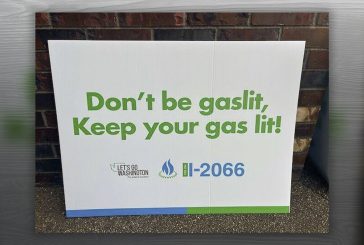
Messaging on the “Yes” side of this campaign was short and sweet; “stop of the gas ban”, “end the gas tax”, “they’re taking your choice”, etc. Despite the fact that these slogans are not representative of what I-2066 actually does, they are simple messages that the average voter can understand and read as they are driving at 40mph down a road. AP US Government teacher, Karen Parker, explained to me that it was difficult for the “No” campaign to find a short and sweet way to state those claims were false and also provide incentive for voters to vote “no” instead.
2: Language
Although there are requirements in place to make sure that citizens have the capacity to understand ballot measures, the jargon within them can still make it difficult for voters to understand what they are even voting for. This may have led voters to be misled, confused, and/or conflicted on what it meant to vote “Yes” or “No” on I-2066.
3: It Hit Closest to Home
At least, it felt that way for many voters. I-2117 felt like a broad measure against efforts to reduce climate change, I-2124 felt like a broad measure against healthcare, and I-2109 impacted less than 1% of Washington voters. The messaging on I-2066 illustrated the effects of the Washington Decarbonization Act as rising prices for everyday citizens and revoking their choice, which is powerful messaging. The characterization of I-2066 as leaving the strongest impact on the daily lives of Washington citizens, likely lead the measure to pass in the end.
A Final Message
At the end of my interview with Karen Parker, she provided me with some helpful advice that I felt was too important to leave out of this article. Ballot measures tend to be confusing and misleading, so her number one piece of advice is to research who puts this measure on the ballot in the first place, who funds the campaign, which interest groups support it, etc. The “who” behind ballot initiatives can at times be more telling than the explanatory statements the voter’s pamphlet provides us. Using this information can be a helpful tool in determining whether you want to vote “Yes” or “No” on initiatives in the future.
Leave a Reply