Every high school student has probably wondered how college applications are reviewed. Does race still matter in admissions? In 2023, Students for Fair Admissions v. Harvard, a case that challenged Harvard University’s use of race in admission decisions, made its way to the Supreme Court. In the end, the Court decided in a 6-3 decision that colleges can no longer consider race directly. While this may seem like a distant legal issue, it has real consequences for students like us preparing for college today.

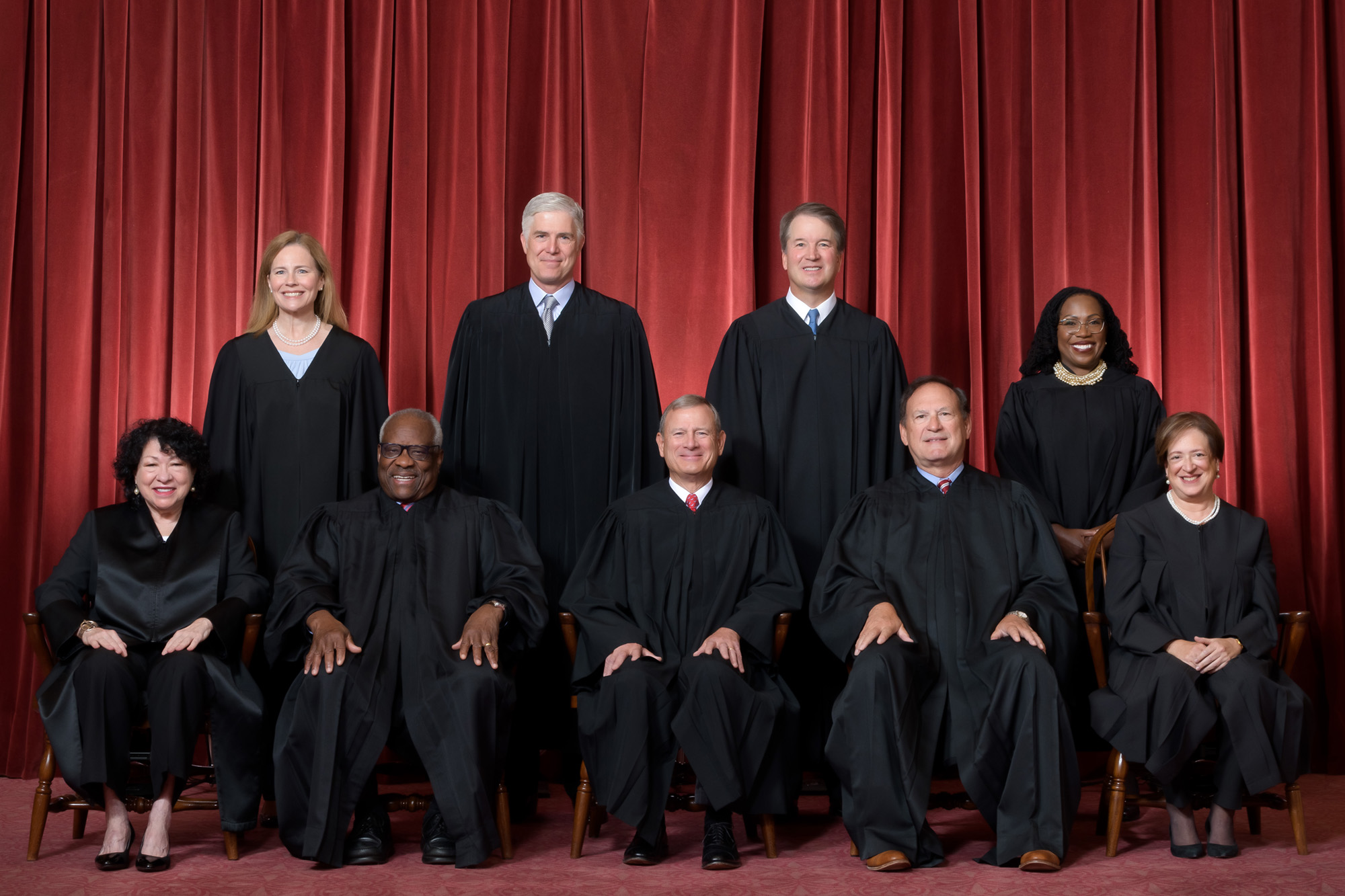
Before explaining the case, it’s helpful to understand how the Supreme Court works. The Supreme Court is the highest court in the United States, established by the Constitution to serve as the final judge of federal law and the Constitution. There are nine justices, who are nominated by the President and confirmed by the Senate, and they can serve for life. A decision from the court is the final call, and it sets precedent that is followed by the country for years to come. As Justice Robert Jackson famously wrote in his concurring opinion in Brown v. Allen, “We are not final because we are infallible, but we are infallible only because we are final”.
In this case, the Court issued a 6-3 decision, which means six Justices agreed on the ruling while three disagreed. The vote reflects a clear ideological split: the six conservative Justices shaped the majority, while the three liberal Justices dissented. This 6-3 split has been increasingly common on high-profile social issues like affirmative action, showing how the Justices’ political philosophy shapes rules that affect our everyday life – including college admissions.

Now, how did this case arise? The case was brought by Students for Fair Admissions (SFFA), an organization that filed a lawsuit against Harvard, claiming that Harvard’s “holistic” admissions process, which considered race as one factor among many, led to discrimination against Asian American applicants in favor of other groups, which violated the Civil Rights Act of 1964 and the Equal Protection Clause of the Fourteenth Amendment. In response, Harvard defended its policies by arguing that its admissions process was lawful and consistent with Supreme Court precedent, such as Grutter v. Bollinger, a case which allowed race to be considered in order to achieve a diverse student population. This case was first heard in the U.S. District Court for the District of Massachusetts.
Fun Fact: I visited this courthouse during my summer program in Boston and got to sit in a couple hearings! We met Judge William G. Young, a Reagan‑appointed federal judge who earlier this year made national news when he issued a landmark ruling on the free-speech rights of non‑citizen students and sharply criticized government actions targeting campus activists. It was so inspiring to meet Judge Young and I left with a new sense of inspiration.

Back to the case. The Court ended up ruling in favor of Harvard, and this decision was upheld by the First Circuit Court of Appeals. However, still discontent with the result, SFFA continued to file an appeal to the Supreme Court, and the Supreme Court granted certiorari (accepted the case) in June 2023. The Supreme Court typically accepts an extremely small number of appealed cases – less than 1% of cases submitted, about 80 out of the 7,000-8,000 appeals it receives. The Court chooses only to hear cases that involve the most pressing and important legal issues, and as debates regarding the ethics behind race conscious admissions were arising, the Justices agreed to hear it. In a 6-3 decision, the Supreme Court overturned the decisions of the lower courts, ruling against Harvard, stating that race cannot be used as a factor in admissions. This essentially ends the practice of race-conscious admissions at many colleges.

Chief Justice John Roberts delivered the majority opinion, which is the official decision of the Supreme Court that explains the legal reasoning behind the outcome of the case. This opinion also sets a legal precedent that lower courts must follow and clarifies the law for future cases. In his opinion, Justice Roberts emphasizes that the Equal Protection Clause of the Fourteenth Amendment mandates that “eliminating racial discrimination means eliminating all of it”. He argues that Harvard’s race-conscious admissions policies lacked sufficiently focused and measurable objectives to justify the use of race. Specifically, he writes that these programs “unavoidably employ race in a negative manner, involve racial stereotyping, and lack meaningful end points”. Roberts highlights that the admission systems failed to comply with the constitutional provision that race may never be used as a “negative” and may not operate as a stereotype. The majority opinion did acknowledge the opposing argument that diversity in higher education is a compelling interest. However, Roberts refutes this by arguing that the means employed by Harvard were not tailored to meet that interest. In other words, he claims that the race-conscious policies didn’t actually result in greater diversity.
Alongside Chief Justice Roberts, Justices Clarence Thomas and Neil Gorsuch also filed concurring opinions, which are separate written opinions that agree with the majority decision but for different reasons.

In his concurring opinion, Justice Clarence Thomas emphasizes his longstanding belief in a “colorblind Constitution”. He firmly contends that race-conscious admissions are inherently discriminatory, arguing that regardless of the purported benefits of diversity, the Equal Protection Clause prohibits any and all use of race in admission policies.

Alternatively, Neil Gorsuch’s concurring opinion focuses on the statutory aspect of the case. Instead of using the Constitution, Justice Gorsuch used the Civil Rights Act of 1964, which prohibits discrimination on the basis of race in programs receiving federal funding. He argues that the use of race in admissions decisions by Harvard directly violated this statute.
On the other hand, Justice Sonia Sotomayor, joined by Justices Elena Kagan and Ketanji Brown Jackson, filed a dissenting opinion, which is a written statement that disagrees with the majority decision. Sotomayor’s dissent was powerful, acknowledging the ideals of equality but still insisting that ignoring race does not erase racism.

She begins by stating, “The Court cements a superficial role of colorblindness that ignores the reality of race and the history of racial discrimination in this country”. This serves as a powerful overview of her argument, which is that the Equal Protection Clause of the Fourteenth Amendment was not designed to ignore race but to remedy the lasting effects of centuries of discrimination. Though the U.S. has progressed significantly, Justice Sotomayor highlights how racial inequalities can still shape access to education, income, and opportunity – and that affirmative action was one of the few tools that helped close that gap. She therefore emphasizes that ignoring race does not mean that a society remains racially unequal. This idea is shown through her writing, “What was true in the 1860s, and again in 1954, is true today: Equality requires acknowledgement of inequality”.
Her dissent underlines the historical context of racial discrimination in the United States, highlighting that the Equal Protection Clause was enacted to address these disparities in the first place. Justice Sotomayor’s words resonate because they confront a difficult truth: while the “colorblindness” in Justice Thomas’s opinion sounds fair in theory, it can hide and overlook existing disadvantages. If only those who already have access to better schools and resources can succeed, then the promise of equal opportunity remains unfilled.

Justice Ketanji Brown Jackson filed a separate dissent, emphasizing that deeming race irrelevant in law does not make it so in real life. Like Justice Sotomayor, she argues that the majority’s decision failed to recognize the persistent realities of racial inequality, reinforcing the need for race-conscious policies to promote genuine equality and inclusion in higher education.
While the case is complex on a legal level, it also has very real implications for students like me as I navigate the college admissions process. As an Asian American student, I’m in a strange position in this debate. At first, this ruling seems like it’s meant to help students like me. After all, much of the case centered around claims that Asian applicants were disadvantaged by affirmative action. But when I dig deeper, it becomes much more complicated. This case isn’t just about college admissions, it’s about how we define fairness in a country where opportunity has never been evenly distributed.

In my opinion, the Court’s decision doesn’t really solve the issue of fairness in admissions; instead, it seems to suppress it. By pretending race no longer matters, it ignores the ongoing systematic issues and how identity shapes people’s experiences – including my own.
Justice Sonia Sotomayor’s words resonate with me the most. She reminds us that merit doesn’t just appear out of nowhere; Our grades, scores, awards, and extracurriculars we use to measure “merit” are deeply shaped by the environments we grow up in: schools, families, and social systems. Pretending that race no longer matters doesn’t create equal opportunity, it simply glosses over the ways inequality still affects people’s lives.
As students at Overlake, we are constantly told that success is all about hard work and effort. But this case forces us to question what “fairness” really means. If some students start with more support, resources, or privilege, is it truly fair to judge everyone by the same standard? And if we remove the tools meant to acknowledge those differences, are we moving towards equality – or away from it?
Leave a Reply